The Role of Environmental Education in Somalia’s Recovery and Development
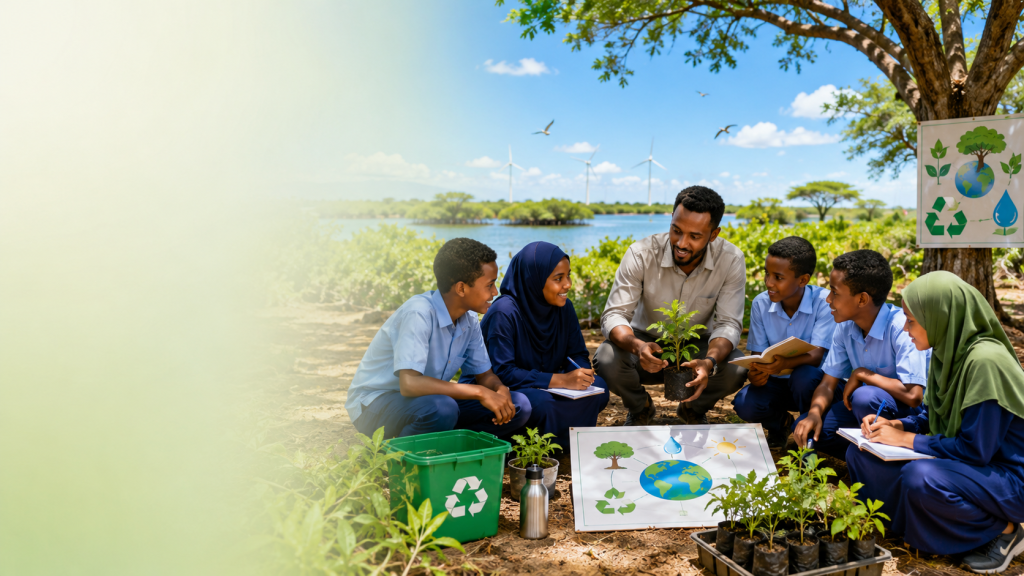
The Role of Environmental Education in Somalia’s Recovery and Development
Prof. Said Abubakar
Somalia’s transition toward stability and sustainable development cannot be separated from its ecological future. As a nation emerging from decades of conflict, Somalia faces intertwined challenges: environmental degradation, climate vulnerability, resource scarcity, and weakened governance. In this context, environmental education (EE) is not merely an academic subject but a foundational strategy for peacebuilding, resilience, and sustainable recovery.
Why Environmental Education is Vital for Somalia
Environmental education is vital for Somalia because it addresses the interconnected challenges of environmental degradation, climate vulnerability, and post-conflict recovery. By fostering an understanding of ecological systems and sustainable practices, environmental education equips Somali communities with the knowledge and tools needed to manage natural resources cooperatively, mitigate climate risks, and rebuild social cohesion. This approach not only promotes environmental stewardship but also supports broader goals of peace, stability, and long-term development.
Key Gaps in Current Strategies
Despite promising initiatives, several gaps limit the impact of environmental education in Somalia. Programs are often fragmented, underfunded, and poorly coordinated between NGOs, government, and local communities. Environmental education remains marginal in national curricula, teacher training, and school infrastructure, reducing its reach and sustainability. Many initiatives are externally driven, which limits community ownership and relevance, while indigenous ecological knowledge is frequently overlooked. Additionally, weak monitoring and evaluation mechanisms fail to capture long-term behavioral or ecological impacts, hindering the ability to adapt and scale effective interventions.
Actionable Recommendations
To maximize the potential of environmental education in Somalia, a coordinated and context-sensitive approach is essential. First, environmental education should be integrated into national education policy through a formalized, cross-cutting curriculum for primary and secondary schools, supported by locally relevant teaching materials. Second, investing in teacher training and school green infrastructure—such as gardens and water-harvesting systems—can enhance practical learning. Third, programs must center community knowledge and participation by involving local leaders, farmers, and women’s groups in design and implementation. Given infrastructural constraints, digital and radio-based learning should be leveraged to reach remote and displaced populations. Strengthening partnerships through a Somalia Environmental Education Network can improve coordination and resource mobilization. Monitoring should shift toward community-defined indicators that track behavioral change, ecosystem health, and social cohesion. Finally, linking environmental education to livelihood opportunities—such as sustainable agriculture, renewable energy, and ecotourism—can create green jobs and foster youth entrepreneurship, ensuring that education translates into tangible economic and environmental benefits.
Conclusion
Environmental education in Somalia is a catalyst for holistic recovery—connecting ecological health with social stability, economic opportunity, and intergenerational justice. By adopting a strategic, inclusive, and context-sensitive approach, Somalia can transform environmental challenges into platforms for community empowerment, peace, and sustainable development. The time to invest in EE is now: not as an optional add-on, but as a core pillar of Somalia’s post-conflict rebuilding agenda.
good